 Panning is also combined with zooming in or out on a single subject, leaving the subject in the same portion of the frame, to emphasize or de-emphasize the subject respectively. This is a very popular shot and would be hard to find a piece of film thats did not have at least one pan shot.
Tilt: A tilt is a vertical camera movement in which the camera points up or down from a stationary location.
 Tilting is less common than panning as it is the way humans work — we look left and right more often than we look up and down. Often used for establishing characters, for example, a new character or a tall building.
Track: Tracking is often defined as movement parallel to the action, or at least at a constant distance. Usually the camera is mounted on a cart which travels along tracks.
This is a famous tracking shot taken from the movie Goodfellas, this is far longer than what the average tracking shot would be.
Dolly: In many circles a dolly shot is also known as a tracking shot. However, dolly is defined as the in-and-out movement (i.e. closer/further away from the subject), while tracking means side-to-side movement.
This is an example of a dolly shot (1.50-4.37) taken from the movie panic room. You can see the similarities between the tracking shot and the dolly shot and how easily they can be taken for one another.
Crane: A crane shot, is basically, a shot taken by a camera on a crane. Most cranes accommodate both the camera and an operator, but some can be operated by remote control.
 The most obvious uses are to view the actors from above or to move up and away from them, a common way of ending a movie. Some filmmakers like to have the camera on a boom arm just to make it easier to move around between ordinary set-ups.
Steadicam: This is a technique which mechanically isolates the operator's movement from the camera, allowing a very smooth shot even when the operator is moving quickly over an uneven surface.
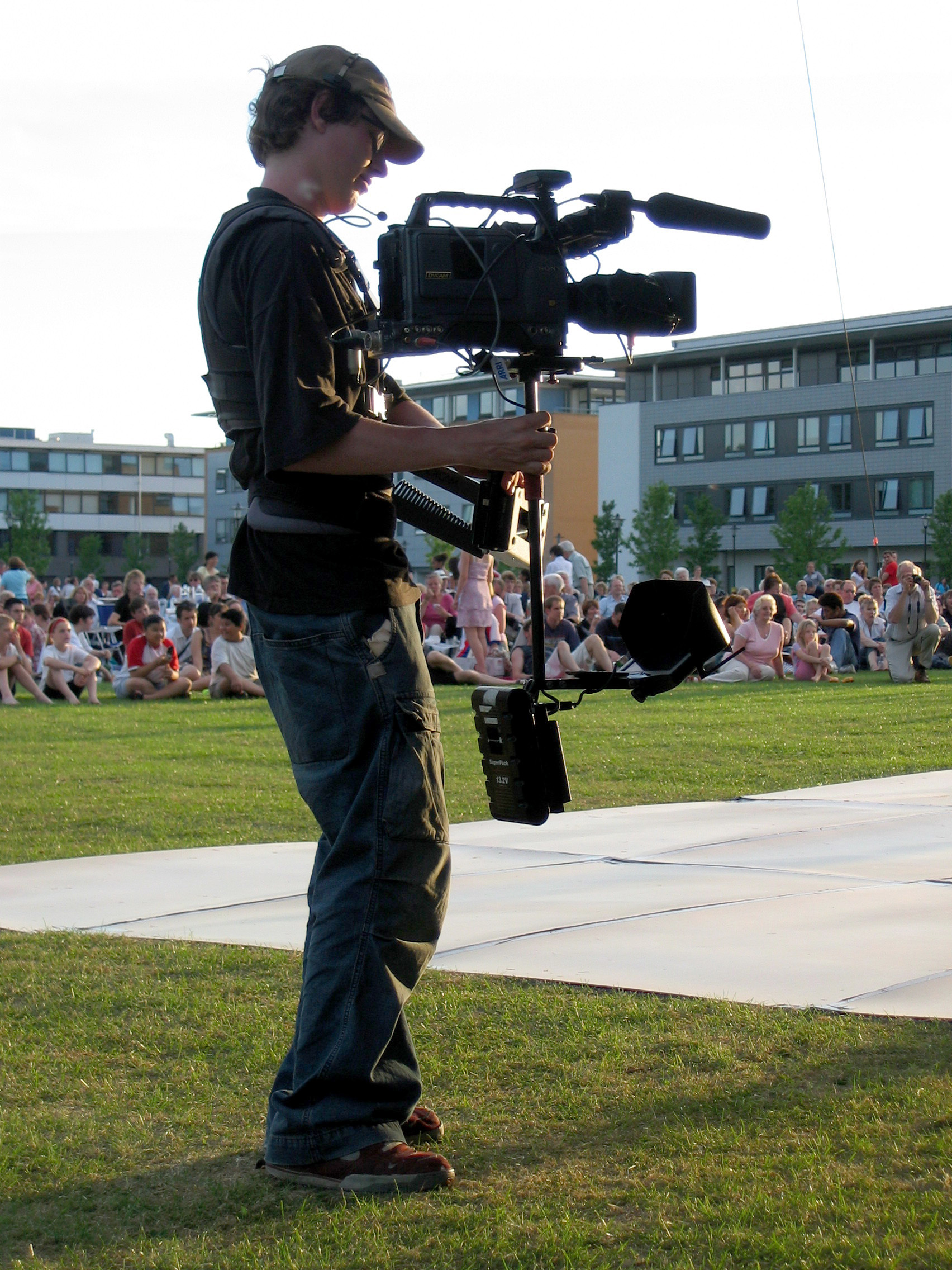 This is a popular shot that allows the camera man to get better, clearer shots, without compromising the scene, for example, in a chase scene.


1 comments:
Dan, this is absoloutely brilliant work. You have put a lot of effort in and it shows. Keep it up!
Post a Comment